A-Z Challenge 2015 – U is for Underdog

Irish sports teams down through history have generally performed better in the role of underdogs. This role is often attached to the Irish because of a smaller playing population than other nations in field sports, but it’s also tied into the Irish psyche. We are a people who are averse to bigging ourselves up. Eternally uncomfortable taking compliments. Those who do show confidence in themselves and are willing to broadcast it to others are automatically treated with suspicion! ‘Who does that fella think he is? He’s getting ideas way beyond his station’. That kind of thing. We’ve always viewed the confidence of the average American with bemusement. American people portraying the best of themselves in actions and words is viewed as something that makes them a bit strange to us. As if expecting the best possible service in restaurants and having no issue in sending food back is something to be ashamed of. ‘Oh, we can’t be seen to make a fuss’ or ‘Don’t be making a show of yourself’ would be likely responses by an Irish person at the restaurant table rather than sending something back. So more often than not we’ll tell the waiter or waitress that the dish is ‘grand’, even when we think the opposite.

In the sporting context, Ireland has revelled in the role of underdogs in rugby and soccer as prime examples. While we are now on an even par with the best in the world now in rugby, there were decades when Ireland were the poor relation in the old Five Nations rugby championship. But every so often during those years Irish pride kicked in against the auld enemy England, leading to famous Irish victories. The 2007 Rugby World Cup could be seen as an example of the favourites tag not suiting us. With Brian O’Driscoll in his prime and Ireland consistently finishing in the top two or three in the Six Nations during the 2000’s, we were rightly considered an outside favourite to win the 2007 World Cup. There are a bunch of reasons why it went so wrong at the tournament, as Ireland lost to both France and Argentina in the group stages and went home without making the knockout stages. Overconfidence was given as one of those reasons. It just doesn’t suit us! Give us the underdogs role any day and we’ll revel in it. Thankfully, this mentality is gradually changing within Irish rugby as two successive Six Nations championships has backed up Irish confidence in the teams ability. Having the best coach in world rugby in Joe Schmidt also helps. With the rugby world cup coming around again this September, all of Ireland is quietly confident that we can do something special. But whisper it!

On the soccer front, Ireland has always punched above its weight considering we don’t have a professional soccer league. After decades of failure, Ireland finally qualified for major tournaments under Jack Charlton with the 1988 European Championships and the 1990 World Cup. And in both cases, without being one of the fancied teams, they qualified from the group into the knockout stages. At our next two tournament appearances – 1994 USA World Cup and 2002 World Cup – again we overachieved and qualified for the second phase. We had to wait until 2012 before Ireland appeared in a major tournament, the European Championships in Poland. Despite a mixed qualification phase, the team was generally solid and it was generally felt that we had a fighting chance against group rivals Italy, Spain and Croatia. As it was we were well beaten in every game, finishing bottom of the group with no points. Granted it turned out to be the strongest group as Italy and Spain were the eventual finalists. But it seems the hype and euphoria of qualifying after so many years led to us getting ahead of ourselves and expecting too much. Perhaps if the entire country had written off our chances before a ball was kicked and accepted our fate as underdogs, then the performances and results would have been better!
A-Z Challenge 2015 – U is for Underdog

A-Z Challenge 2015 – T is for The Last Battle by Cornelius Ryan

Cornelius Ryan wrote historical books about some of the biggest battles of World War II. I first read his books around twenty years ago when studying History for my Leaving Cert exams, after my teacher recommended them. A few things about his writing really appealed to me. First and foremost, the level of research that went into each book. The extensive indices at the back of each book clearly illustrate this. Hundreds of people were interviewed for each book, civilians and combatants alike. Second was the style of writing, so simple and straightforward yet hugely powerful. Thirdly, the human angle. His writing about major battles included as much anecdotal evidence from civilians as soldiers and generals telling of their experiences.

The Longest Day tells the story of the Allied D-Day Landings in Normandy in June 1944, arguably the most high profile battle of WWII. A Bridge Too Far tells the story of Operation Market Garden, the hugely ambitious attempt to air drop Allied soldiers beyond the Rhine behind enemy lines in September 1944. A plan which failed, as Allied troops were dropped into the wrong locations in Holland, eventually leading to The Battle of Arnhem.

It’s The Last Battle which arguably has the biggest emotional impact, recounting the events leading up to the fall of Berlin in April 1945 which brought an end to World War II. The book tells the story from all sides…German, Russian, British and American troops as well as German civilians. And this was one of the other main skills of his writing…providing balanced accounts without taking sides.

The Last Battle is different from the other two books in that it captures the impact of the pending end to war on those involved in the endgame. The Allied forces as they made progress through France and into Germany. The Russian forces as they approached Berlin from the east, still scarred from the years of German invasion in their country and the losses they suffered. Ryan tells of Russian troops who had no homes to go back to after the war. The decision made by Eisenhower not to race the Russians to see which army would reach Berlin first. The German army as they gradually came to terms with pending defeat. Including Hitler of course, and his increasingly erratic behaviour as he realised defeat was coming. And most poignantly, the people of Berlin as they braced themselves for the arrival of Russian troops and what it would mean to them. The book tells of Berlin women discussing the various suicide means available to them and their children, based on accounts of Russian troops raping and pillaging their way through other German towns en route to Berlin.

Somehow when reading his books twenty years ago, I didn’t actually realise that Cornelius Ryan was Irish. Born in 1920 in Dublin, he moved to London in 1940 and became a war correspondent. He emigrated to the U.S. in 1947 and began writing for Time magazine. Research and notes for The Longest Day started in 1956 and the book was published in 1959. By 1974 he had completed the third book, A Bridge too Far. The eighteen year time span shows just how big a project it was to research and write the books. Ryan’s Irish heritage has now increased my respect for his work and I realise that I need to add them to my collection and read them again soon. Now there’s a project for the weekend!

A-Z Challenge 2015 – T is for The Last Battle by Cornelius Ryan

A-Z Challenge 2015 – S for Shuffle

iPhone shuffle. Let fate decide the soundtrack to my day. Or the soundtrack to my work commute, at the very least. A random set of songs from the 2,000 odd beauties in my phone. Sometimes they don’t quite fit right in sequence, but still sound great on their own. And sometimes they follow each other in perfect harmony and manage to capture a mood while travelling on the tram or walking and taking in the various sights and sounds. Such as walking through Trinity College en route to the office, as spring sunshine breaks through and just the right song comes up. Like Hoppipola by Sigur Ros.

Or sometimes the soundtrack can change a mood, for the better. Early morning work angst anticipating issues or problems during the commute. Then a belter of a song comes up on random play and negative thoughts turn to positive ones. Like Sabotage by Beastie Boys. Or Go With the Flow by Queens of the Stone Age. Or Next Year by Foo Fighters.

Anything can happen on any given day. Radiohead followed by Beach Boys. Vampire Weekend followed by Arcade Fire. A beautifully understated Camera Obscura track sandwiched between manic Pixies and Weezer tracks. Pink Floyd then Modest Mouse.

Then there are my own playlists for certain moods and situations. One for running, full of energy and euphoria. Crossing the finish line of a half marathon in Vienna with the sounds of Invincible by Muse in my ears was some feeling! On the totally opposite end of the spectrum, there’s a playlist of chilled songs that works perfectly on flights especially when some private time is needed and maybe a nap. Nodding off to Bjork’s All is Full of Love or Birds by Bic Runga is very pleasant indeed.

The random play soundtracks are the most interesting though, keeping me honest and entertained on the morning route to work before they slowly dissolve into the order of the day.  One tune might stay with me during the day however, until I’m out of the office heading for home and another random playlist takes over. Wonder what little gems tomorrow morning will bring…

A-Z Challenge 2015 – S for Shuffle

A-Z Challenge 2015 – R is for Rendezvous (flash fiction)

Large snowflakes drift lazily onto an ink blue sea, resting for a moment on the water before disintegrating. Clouds obscure a bright moon which hangs high over a calm sea. Gentle waves lap the shore of a sandy horseshoe bay. The flurries of snow thicken but fall in complete silence onto fine sand, dulled in the darkness save for the odd twinkle of coral.

The hull of a wooden rowboat juddering against sand breaks the silence of this place. With a swift movement the boatman brings in the oars and leaps out from the bow onto wet sand. Powerful shoulders pull the boat a few metres up the beach with the rope attached to the bow. For a moment the clouds part and moonlight partially illuminates the long narrow beach, allowing him to spot the shallow cave a few metres further up. He drags the boat up as far as the cliff face and turns it on its side at the mouth of the cave. Once again clouds obscure the moonlight. He looks up at the white chalk cliff stretching almost one hundred feet above, disappearing into darkness. He peers up for a moment longer, calculating. The powdery snowflakes land on his ruddy cheeks, on his black wool hat. They land in his eyes, blurring his vision. He turns away and gazes out to sea, his eyes struggling to make out the water as sea and sky merge at some unknown point of darkness. He’s thankful for a calm night.

Taking the waterproof haversack from his shoulder, he crouches down and removes Maglite torch and glances quickly at the map in his inner pocket. Then he zips up the dark fleece lined jacket to the top so it covers his mouth and starts to walk to the east end of the beach. He claps his gloved hands together a few times for warmth as he walks. Within a few minutes the torch beams make out the first of the concrete steps, the first of which is partially submerged by seawater. He looks up at the steps and railing that hug the cliff side before disappearing. He pauses a moment, lets out a slow deep breath and starts to ascend.

At the top of the cliff a solitary black saloon sits in the car park with engine off, facing out to sea. Driver and passenger sit in silence, watching snowflakes starting to build up on the windscreen. Sooner or later they will have to turn on the engine to clear snow with the wipers. But not yet.

A-Z Challenge 2015 – R is for Rendezvous (flash fiction)

A-Z Challenge 2015 – Q is for Queenstown, New Zealand

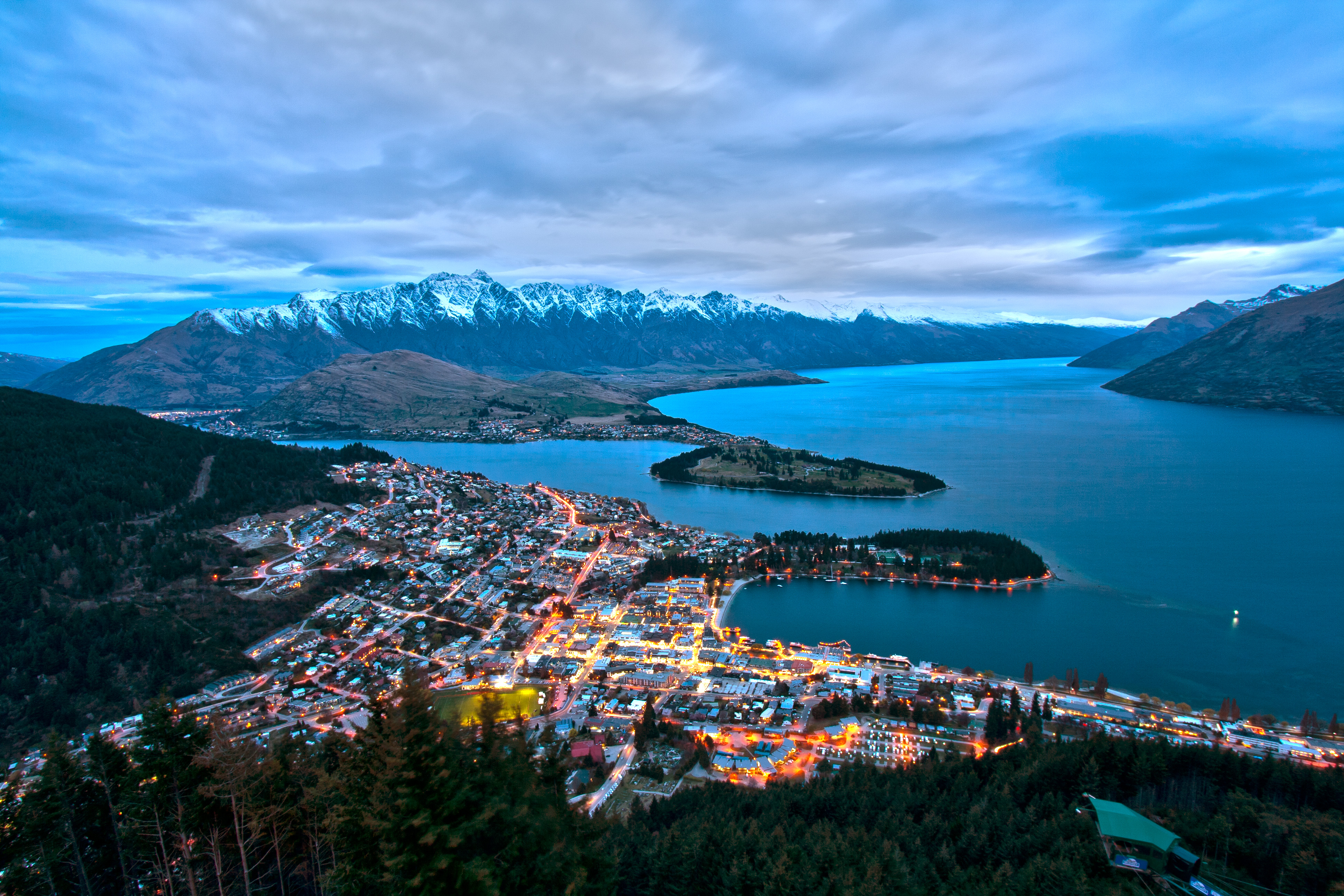
Queenstown_from_Bob's_Peak

Q for Queenstown

Queenstown on New Zealand’s south island is known as the adventure sports capital of New Zealand. When I visited there in June 2003 during a year of travel, my backpacker budget was stretched. So not for me the skiing, bungee jumping, whitewater rafting, helicopter flights, sky diving, 4wd off road tours. Despite a stretched budget, I still managed to sample one of the towns other famous pursuits…its legendary nightlife. I arrived in cross country from Dunedin on a gloriously crisp and sunny winter’s day, travelling alone. Checking into the YHA – surely one of the most spectacular settings for a hostel anywhere in the world, with beautiful Lake Wakatipu in front and the Remarkables mountain range snow capped in the distance – I knew no one in town. By the time I left town a few days later, I’d visited plenty pubs and made many friends! In my defence, I did complete one active task during my time there, which was to walk up Queenstown hill on a sunny winter afternoon. The views from 900 metres up certainly made it worthwhile. Oh and I also tried some outdoor ice skating on my last day there, albeit very badly!

My two months in New Zealand as part of that year away travelling in 2002/2003 were the highlight of that year, and the time spent in Queenstown was one of the highlights of my time in NZ. It wasn’t all about drinking $2.50 pints of Loopy Juice or walking up hills either. A drive in the rain to Glenorchy searching for sites where Lord of the Rings had been filmed with English and Welsh friends from the hostel was great fun. We found no LOTR sites though, as it turned out! A drive down to Te Anau and the world famous Milford Sound fjord with another bunch from the hostel was another highlight. The drive down with snowy hills and peaks as far as the eye could see was almost as spectacular as the boat trip out into the fjord. Despite all this lovely nature stuff, it’s still the craic of the three nights out in Queenstown which stand out most. For a twenty five year old, kissing a lesbian and a divorcee all in the same weekend in this  beautiful party town stood out as big moments on that world trip!

A-Z Challenge 2015 – Q is for Queenstown, New Zealand

A-Z Challenge 2015 – P is for Parklife

I’ve mentioned my local park earlier in this A-Z blog, but not by name. Marlay Park is a 300 acre green area one kilometre from my house. I’ve ran so many kilometres within and around its perimeter in the last five years that I sometimes refer to it as my back garden! It’s a beautiful place to run on a balmy summer evening or on a bright and crisp winter morning. It has so much more to offer than pathways for runners though.

From a nature point of view, it’s pretty much got it all as parks go. Big, green wide open spaces. Forest, streams, ponds. Even a few waterfalls. On the sporting and recreational end, most boxes are ticked too…eleven football pitches, a nine hole par three golf course, tennis courts, two children’s playgrounds. A miniature railway!

The place has history too. Marlay House is a centuries old Georgian mansion which dominates the front of the park. Close to it is the beautifully manicured walled garden with exotic plants and water features. Even a resident strutting peacock which has no inhibitions about showing his plumage to onlookers! The park caters for those looking for a tasty coffee or brunch/lunch with a cafe adjacent to the walled garden. And at weekends the Farmers Market takes over a courtyard in front of the house and an array of local artisans and producers sell their very enticing wares. Sometimes after a Saturday or Sunday morning run I’ll undo the good work of calories burned by treating myself to a nice latte and sausage roll!

A full morning or afternoon can easily be spent in this vibrant piece of south west Dublin. Every time I run in the park on weekends, I tell myself I should spend more time there relaxing and enjoying it. With all the families and fellow exercise enthusiasts doing laps, at least the runs are never dull as they allow for that ever interesting pastime…people watching! What amazes me now looking back is that until I took up running fully in 2010, I had spent next to no time in the park. And I have been living in the area since 2007! I honestly don’t know what I was doing during those three years. That was the past. Looking ahead, I hope to keep running around and relaxing in this lush piece of green for years to come.

A-Z Challenge 2015 – P is for Parklife

A-Z Challenge 2015 – O is for oranje

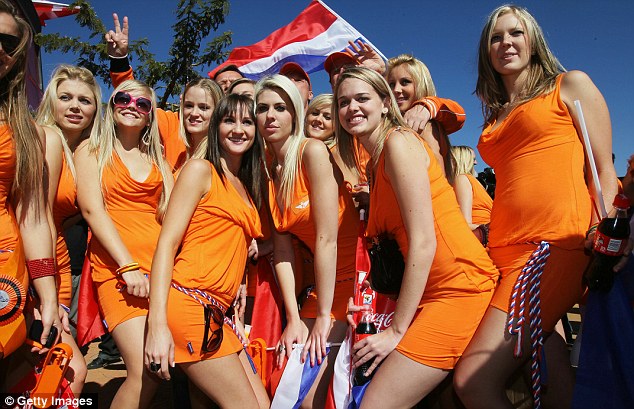
Dutch fans

Since I was a kid I’ve been fascinated and slightly obsessed with the oranje, the Dutch national football team. Their victory at the 1988 European Championships was the first time I’d ever seen the men in orange play, and the fascination started from there. Ireland were ten minutes away from drawing with them in final group match of Euro ’88, a result which would have knocked out the Dutch and put Ireland through to the semi finals. The oranje scored a late winner to break Irish hearts, and the momentum from that win carried them to 2-1 over West Germany in the semi finals and then a 2-0 win in the final against Russia. Marco Van Basten was the star striker in that tournament and his exquisite volley in the final was the standout moment. Part of the fascination for me was not just the stylish and arrogant football they played but the bright orange jerseys. The sight of large swathes of the stadia taken over by thousands of orange bedecked fans really captured my imagination too.

The Euro ’88 tournament win was hugely significant in transforming the Dutch national team from perennial nearly men to actual winners. The 1970s had been a golden period for Dutch football with Ajax Amsterdam winning three consecutive European Cups from 1971-1973 playing Total Football, a style of play that ensured every player on the team was comfortable playing any outfield position. Ajax began it and the national team also applied it in the ‘70s, ensuring every player was technically proficient and comfortable in possession. The end result was that two highly gifted Dutch squads reached the final of World Cup 1974 in Germany and Argentina in 1978. And in both, the Dutch were beaten by the hosts. In each tournament it was generally regarded that they played the best football, though it only brought them second place.

Holland is a nation whose people who are never afraid to show their individualism and expression. And who always favour seeing their team play the beautiful game, sometimes even at the expense of victory.  In his book ‘Brilliant Orange’, David Winner captures this mindset as ‘Holland’s morally superior beautiful losing’. Winning the Euro ’88 tournament put an end to the beautiful losing, temporarily at least. By the 1990s they were at it again, losing 3-2 to eventual champions Brazil in the quarter finals of USA 1994 and going one step further in France 1998. Again playing with style and free scoring, a squad of huge talent reached the semi finals only to lose on penalties to Brazil once again. Studying in Aachen, Germany in 1998 allowed me to travel to the Dutch border town of Vaals to watch that semi final with hundreds of locals. I really felt their pain after the penalty shoot out, but they would have taken some comfort knowing their team had provided many of the best moments and goals of the tournament. None better than Dennis Bergkamp’s last minute winner against Argentina in the quarter finals, one of the best World Cup goals in history for the combination of technique and timing in such a high stakes match.

https://www.youtube.com/watch?v=XsZkCFoqSBs

The Dutch have continued to provide many beautiful orange-soaked moments in tournaments in the 2000’s, and once or twice they again came close to winning outright by playing the best football until self-doubt once again set in. Euro 2000 is one example, where they blazed through to the semi finals and after dominating Italy throughout that match without scoring they eventually succumbed to penalties against the stronger minded Italians. At Euro 2008, they were installed as favourites after the group stage after topping the Group of Death with wins against Italy (3-0), France (4-1) and Romania (2-0) only to then succumb to the magic of Andrei Arhavin and Russia in the quarter finals, losing 3-1. In 2010 they again reached the World Cup final, in South Africa. In contrast to the teams of the ‘70s, the 2010 vintage was not as talented or refined technically and it was a mixture of luck and brutal tactics which paved the way to the final. Coming up against tournament favourites Spain in that final, the coach Bert van Marwijk decided that his squad could not compete with the Spanish on a technical or football level so he set his team out to disrupt their rhythm by trying to kick lumps out of them. Thankfully the tactic failed – just about – as the little genius Andre Iniesta scored with only minutes of extra time left in a dour final to secure the Spanish win. While the younger Dutch fans were proud of their team and saw each match as an excuse to dress up and party, the older generation were affronted by image of Dutch football portrayed in that final and in the tournament as a whole. Louis van Gaal partially managed to restore the traditional image in the first group match of World Cup 2014 with the unforgettable 5-1 mauling of the Spanish. Unfortunately, as the tournament progressed and stakes got higher Van Gaal toned down the flowing football and turned up the low risk approach. The end result was a fairly dull 0-0 semi final against Argentina which had been touted as a possible classic in advance. Ultimately, the Dutch lost once again on penalties and missed out on a place in the final.

Watch any World Cup or European Championship highlights programme from the 1970s onwards and there will be many beautiful moments gift wrapped in oranje. The Dutch people have a sense of pride in this aesthetically pleasing football, even though the results ultimately show one solitary tournament win – Euro ’88. Despite this, until the end of my days watching football I’ll always closely follow the Dutch in every tournament they play in and maybe throw on my Holland jersey now and again. There’s every chance they won’t win another tournament in my lifetime but are guaranteed to leave their mark on each one. The mark of brilliant orange.

A-Z Challenge 2015 – O is for oranje

A-Z Challenge 2015 – N is for Nearly Home (flash fiction)

(intro for a short story, to be explored further!)

Nearly Home

He started the final round fifteen minutes before closing time. In April this was 8.45pm, as dusk was descending and the air starting to cool. His favourite time of the year. He hopped into the motorised buggy, clicked into gear and set off.

Thoughts now turned to supper and what herself would have ready. He loved stepping inside the back door and the waft of hearty cooking filling his nostrils. Now as he started up the gentle hill on the far side of the park, his eyes scanned the wide open spaces for stragglers.

‘Park closing in five minutes folks’ was his standard line, each word bellowed with conviction. Two joggers in garish colours seemed to jump slightly twenty yards ahead on the path as they heard the call, their pace instantly quickening as they strived to complete the final lap before turning towards home. He scooted along down the gentle slope on the far side of the park, always enjoying the winding turns in this section as he steered the buggy this way and that.

Down the long gentle path now and back towards the main entrance. He always passed by the elderly couple and their Scottish terriers around the same spot. He gave them his usual disapproving nod for their tardiness; they returned their usual cheery wave. He smiled too, despite himself.

He whistled to himself  as he approached the last hedgerow closest to the entrance. Two starlings caught his eye as they took flight, disturbed from their perch. He watched their ascent momentarily, and failed to spot two shadows crouched under the hedge. They lay in wait for cover of darkness, planning to see him again soon.

A-Z Challenge 2015 – N is for Nearly Home (flash fiction)

A-Z Challenge 2015 – M is for Mesrine

Mesrine

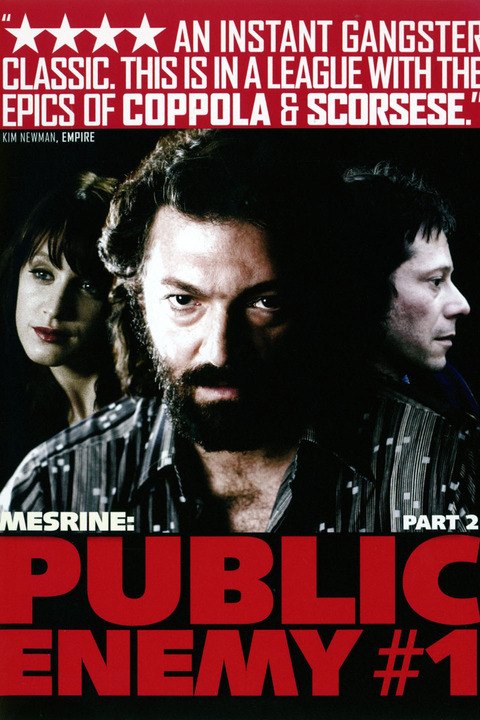
One character I’ve been fascinated with ever since seeing the two movies about his life is Jacques Mesrine. That’s right, not one but two movies…that’s how colourful his life was! Born in Paris in 1939, Mesrine first dabbled in a life of crime in the early ‘60s. By the time of his death in 1979, no one can argue that he hadn’t lived a full life. Granted it was a life less ordinary…multiple bank robberies and kidnappings in Europe and North America. Several arrests and prison sentences. A handful of prison breaks. Committing murder, more than once. A few marriages and a mistress. Restaurant owner. On reading this, the craziest thing about it all is that if a screenwriter came up with this script it would have been considered too far-fetched to be believable! Amazingly, it all happened in real life.

I have to be honest and say that I had never heard of Jacques Mesrine until the first of the two French movies were released in 2009 – Mesrine: Killer Instinct and Mesrine: Public Enemy No. 1. Part of what drew me to the movies was that Vincent Cassel was in the lead role playing Mesrine, and Cassel had been one of my favourite actors ever since his unbelievable turn in the Paris-based immigrant movie La Haine released in 1995. As well as brilliantly bringing his character to life, Cassel also successfully portrayed a sense of humanity in Mesrine. Despite the list of serious crimes he committed, watching the movies you find yourself rooting for him to a certain extent.

It’s certainly worth investing four hours to watch the story of this man’s extraordinary life, maybe in one evening if you’re feeling ambitious or over a few evenings. It’s been six years since I’ve seen the movies in the cinema myself, so I think it’s about time I invested in the two movie box set and had another watch!

A-Z Challenge 2015 – M is for Mesrine

A-Z Challenge – L is for Long Distance Runner

If short distance is sprinting on a track, then I can consider myself a long distance runner! Not long distance as in marathons. The half marathon box has been ticked twice though, Munich in 2013 and Vienna in 2014. I’m usually somewhere between 5-10k distances when I go for a run, and usually 5k or 10k races when I race. Despite being a sprinter as a kid and gradually moving into cross country in early teens, I never really loved running. Playing soccer was the main love from early age right up to mid thirties. Alas, with thirty seven years and ever creakier bones a decision was made to finally hang up the football boots/astro shoes last year! So nowadays long distance running is my only active sport. And slowly but surely, I’m getting to like it. Especially at this time of year, when the evenings are long and brightness still feels like a novelty after a long, dark winter. Last Friday evening for example, my girlfriend and I enjoyed a lovely sunny evening jog in my local park. A great way to start the weekend!

An evening run is a good way to unwind from the working day. Yesterday evening was another sunny evening in the park, the run just what was needed after a few very busy days at work. The running will step up this week however, as the first race of the year approaches at the end of April. So the training will take on more of an edge from now until then, as I’ll be keeping an eye on times per kilometre and pushing to get these down. No chance of beating my personal best 10k time in this upcoming race due to recent injury and illness, but I’ll certainly try to be competitive. And that’s the other main reason why I’m enjoying my running. Gradually realising that I’m not bad at all, as 5k and 10k times have reduced over the last few years. So though the training can sometimes be gruelling and mundane, by the time I’m at the start line on race day I’m focused on gaining a certain time and being competitive in the race. The reducing of my best times will become more of a struggle as I get closer to forty and beyond, but the good news for me is that runners can still run very competitively into their forties. This is when actively monitoring my diet will become important, but for now I’m happy to pound the pavements quite regularly while also enjoying the foods and alcoholic beverages I like whenever they take my fancy. Within reason of course!

Running is probably the best and most accessible sporting activity, for many reasons. Anyone can do it, young or old! There are no rules or techniques to be learned before you start. Just run at your own pace. All that’s needed is grass, pavement, parkland, beach. The only monetary outlay of note is a decent pair of runners. Go on, spend that extra €20…they’ll be more comfortable and you’ll feel the benefits of better running. It’s not weather dependent, in fact running in rain or in winter cold can be as exhilarating for the senses as running in warm weather. And you can decide your own distance. For health and fitness, it’s a great way to keep weight off or indeed lose weight. So there are plenty reasons to give it a go!

A-Z Challenge – L is for Long Distance Runner